The historical trail
Iranica explicitly records baghali polo as rice with fava beans and dill. Its dill entry also identifies dill as the characteristic herb used with fava beans in Iranian cooking.
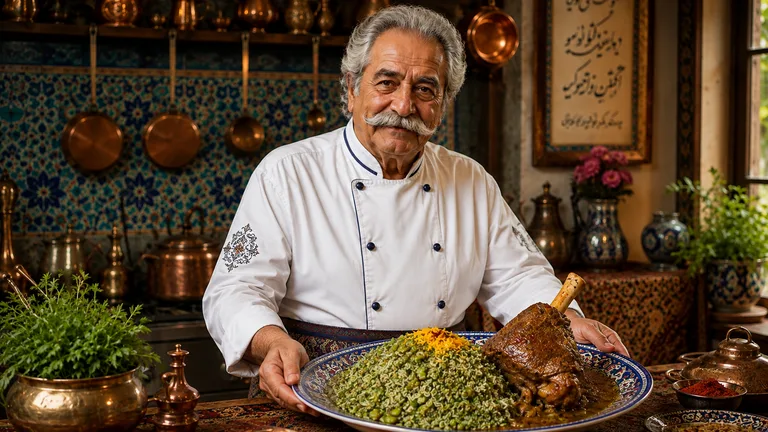
Persian rice and braised lamb
باقالیپلو با ماهیچه
Dill and fava-bean rice with tender lamb shanks in a saffron-onion braise
Lamb shanks braise slowly with onions, garlic, saffron, and warm spices until the meat yields to a fork. Separately steamed basmati is layered with peeled fava beans and fresh dill, then served beside the lamb with its reduced onion juices.
Watch the cooking film
Natural kitchen ambience accompanies this short film. Use the player controls to enable sound.
Across time and place
Baghali polo is an established Iranian mixed-rice dish built around fava beans and dill. Lamb shanks make a generous accompaniment; the rice also has a life of its own and is not defined by one particular meat preparation.
 Across Iran
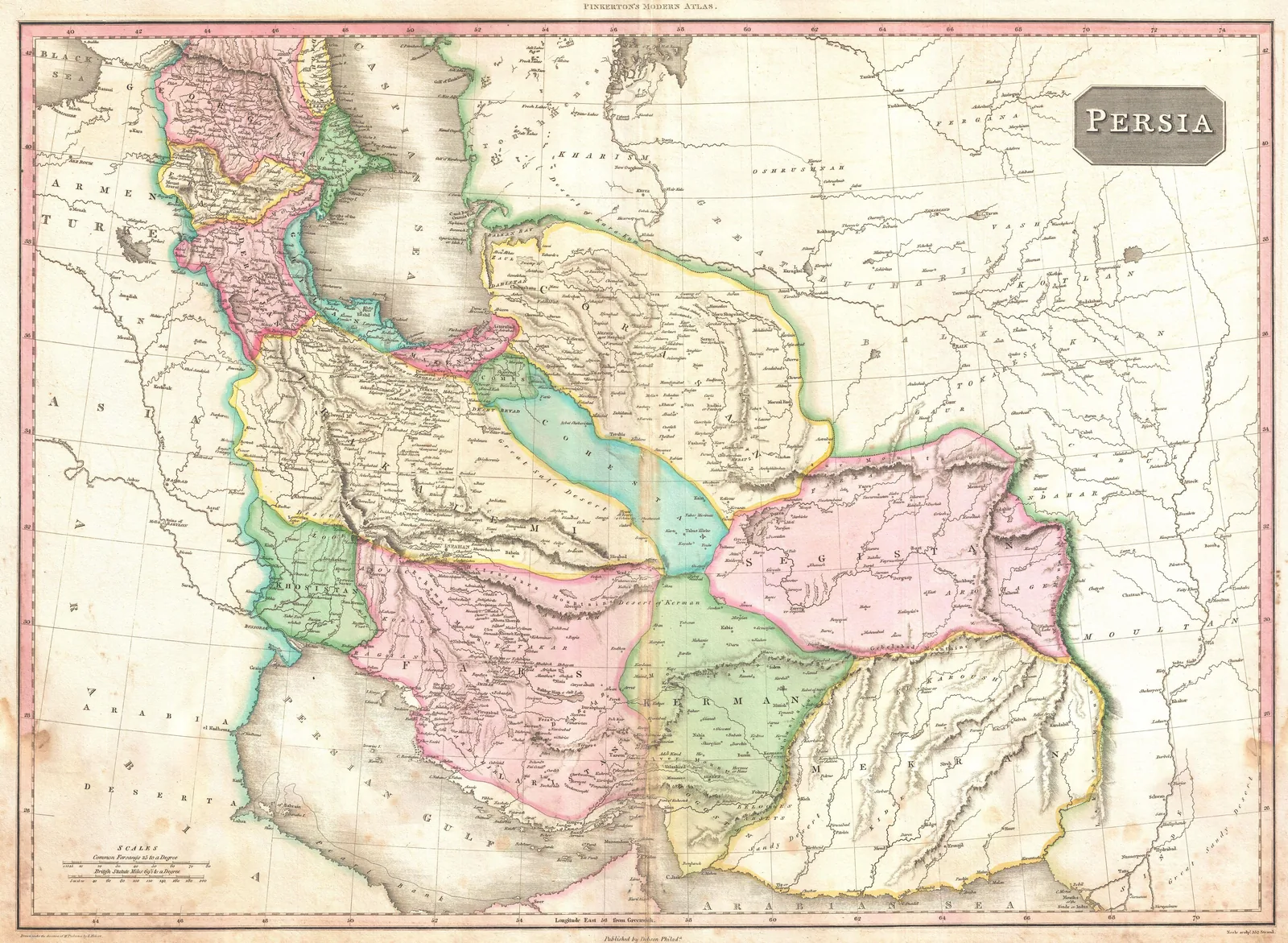
The marker indicates a broad Iranian culinary tradition—not a proven point of invention.
Iranica explicitly records baghali polo as rice with fava beans and dill. Its dill entry also identifies dill as the characteristic herb used with fava beans in Iranian cooking.
Fava beans have a long cultivation history in the region and an especially visible place in Caspian foodways. That agricultural setting provides context, but does not by itself prove one birthplace for baghali polo or its lamb-shank pairing.
Before you begin
Every ingredient includes U.S. and metric quantities, buying guidance, preparation, and a practical substitution.

Why it mattersLong, moist cooking softens shank connective tissue and makes a rich natural sauce.
ChooseChoose similarly sized shanks, about 14 oz (400 g) each, with clean-cut bones and fresh-smelling meat.
PrepareTrim only thick exterior fat, pat dry without rinsing, and keep refrigerated until cooking.
SubstituteBone-in lamb shoulder can be braised similarly, but portion size and cooking time will change.
AllergenPlain lamb has no common major allergen; check pre-seasoned products.
Why it mattersLong-grain rice steams into distinct grains around the beans and dill.
ChooseChoose aged white basmati with few broken grains.
PrepareRinse gently and soak for 30 minutes while the lamb is cooking; drain before boiling.
SubstituteAromatic Iranian white rice is suitable, but its parboiling time needs testing.
AllergenNaturally gluten-free; verify cross-contact warnings if needed.
Why it mattersFava beans give the rice its buttery green bites and defining character.
ChooseChoose tender fresh or frozen beans, already removed from both pod and thick outer skin.
PrepareMeasure after peeling; split large beans along their natural seam and thaw frozen beans enough to separate.
SubstituteGreen peas can replace fava beans for a different dill rice. Do not merely pick fava beans out of a cooked dish for someone who must avoid them.
AllergenFava beans can trigger serious illness in people with G6PD deficiency (favism); avoid them for affected diners. This is distinct from an allergy.
Why it mattersDill is the dominant herb and complements the fava beans.
ChooseChoose fragrant green fronds without yellowing or slime.
PrepareWash, dry well, remove thick stems, and chop finely without crushing into a paste.
SubstituteUse about 1/3 cup (15 g) dried dill, rubbing it lightly before layering; the fragrance will differ.
AllergenNo common major allergen; individual herb sensitivities are possible.
Why it mattersOnions collapse into a sweet, thick sauce around the lamb.
ChooseChoose firm dry onions without soft spots.
PreparePeel and slice thinly; avoid very thick wedges that stay separate in the sauce.
SubstituteWhite onions work in the same amount with slightly less sweetness.
AllergenNo common major allergen; allium sensitivity is possible.
Why it mattersWhole crushed cloves soften into a mellow braising aroma.
ChooseChoose firm fresh cloves without green sprouts.
PreparePeel and lightly crush with the flat of a knife.
SubstituteReduce or omit if garlic is not preferred.
AllergenNo common major allergen; individual garlic sensitivity is possible.
Why it mattersSaffron links the lamb sauce and rice with a shared floral aroma.
ChooseChoose deep-red fragrant threads from a trusted supplier.
PrepareGrind and infuse in 6 tablespoons (90 mL) hot water; use two-thirds for lamb and one-third for rice.
SubstituteOmit if necessary; turmeric is already present and is not an aromatic substitute.
AllergenNo common major allergen; check packaged blends for additives.
Why it mattersTurmeric adds gentle warmth and a golden base to the onions.
ChooseUse fresh fragrant ground turmeric.
PrepareStir briefly into the onions before the braising water.
SubstituteOmit for a paler onion sauce; do not replace with curry powder.
AllergenNo common major allergen; check spice cross-contact if needed.
Why it mattersA whole stick gives a restrained warm note that can be removed easily.
ChooseChoose one small, aromatic stick rather than a large handful of bark.
PrepareAdd whole to the braise and remove before reducing the sauce.
SubstituteOmit if preferred; ground cinnamon cannot be removed and should be used very sparingly.
AllergenNo common major allergen; avoid flavored or sweetened spice mixes.
Why it mattersButter perfumes the rice and helps keep the layers supple.
ChooseChoose fresh unsalted butter for control over seasoning.
PrepareUse 1 tablespoon (14 g) at the rice-pot base and melt the remaining 2 tablespoons (28 g) for the top.
SubstituteReplace with 3 tablespoons (45 mL) neutral oil for a dairy-free adaptation.
AllergenContains milk; ghee is not automatically safe for milk allergy.
Why it mattersOil browns the shanks and protects the rice-pot base.
ChooseChoose a fresh neutral oil suitable for cooking.
PrepareUse 2 tablespoons (30 mL) for the lamb and reserve 1 tablespoon (15 mL) for the rice pot.
SubstituteMild olive oil is suitable with a more noticeable flavor.
AllergenSelect a source oil compatible with diners’ allergies.
Why it mattersMost of the salt seasons the rice boiling water and is drained; a small portion seasons the lamb.
ChooseUse plain fine salt and measure other crystal sizes by weight.
PrepareReserve 1 teaspoon (6 g) for the lamb and 2 tablespoons (36 g) for the rice water.
SubstituteReduce to suit your needs; taste the reduced sauce before any additional seasoning.
AllergenNo common major allergen in plain salt.
Why it mattersPepper balances the sweet onions and rich lamb.
ChooseUse freshly ground pepper for a clean aroma.
PrepareAdd to the onions with the turmeric.
SubstituteReduce or omit for a milder sauce.
AllergenNo common major allergen in plain pepper.
Why it mattersA modest braising liquid concentrates the lamb juices; abundant separate water parboils the rice.
ChooseUse potable water; the lamb and onions make their own rich stock.
PrepareAllow about 3 cups (720 mL) for lamb, 3 quarts (2.8 L) for rice, and 6 tablespoons (90 mL) for saffron; use extra for washing and soaking.
SubstituteUnsalted stock can replace only the lamb’s water; check its salt and allergen label.
AllergenWater has no common major allergen; stock can introduce additional ingredients.
Step by step
Pat the lamb shanks dry without washing and trim only thick external fat. Slice onions and lightly crush garlic. Grind saffron, cover with 6 tablespoons (90 mL) hot water, and steep for 10 minutes; reserve one-third for rice.
Heat 2 tablespoons (30 mL) oil in the braising pot over medium-high heat. Brown the shanks in batches so the pot is not crowded, turning with tongs, then transfer to a plate. Browning develops flavor; it does not cook the meat through.
Lower to medium and add onions to the same pot. Cook until soft and lightly golden, stirring and scraping the base; add a spoonful of water if sticking. Add garlic, turmeric, and pepper and stir for another minute.
Nestle the shanks into the onions. Add cinnamon, 1 teaspoon salt, two-thirds of the saffron infusion, and about 3 cups (720 mL) hot water, reaching roughly halfway up the meat. Bring to a gentle simmer, cover tightly, and cook on low, turning the shanks every 45 minutes and topping up with hot water if needed.
About 95 minutes before the lamb is expected to finish, rinse rice until the water is nearly clear and soak in cool water for 30 minutes. Make sure fava beans are peeled, splitting large ones. Wash dill, dry well, remove coarse stems, and chop finely.
Bring about 3 quarts (2.8 L) water to a full boil with the reserved 2 tablespoons salt. Drain the soaked rice and add it. After 3 minutes add the tender peeled fava beans; boil until the rice is soft outside with a firm narrow core and the beans are nearly tender. Drain immediately and rinse briefly with lukewarm water.
Warm the reserved 1 tablespoon (15 mL) oil with 1 tablespoon (14 g) butter in the dry rice pot over medium-low heat. Add a thin layer of rice and beans, then alternate the rest with chopped dill, ending in a loose mound. Do not pack the layers down.
Make 4 steam channels with a spoon handle, stopping above the base. Melt the remaining 2 tablespoons (28 g) butter, mix with the reserved saffron water, and drizzle over the mound. Cover and heat over medium for 5 minutes until steam forms. Reduce to low, fit the lid cloth with every corner secured above the lid and away from heat, and steam for 35–40 minutes.
When the lamb is fork-tender, lift it carefully onto a warm plate and cover. Remove the cinnamon stick. Skim excessive surface fat, then simmer the onion juices uncovered until lightly syrupy. Taste and adjust seasoning; return the lamb to the sauce briefly to coat and keep hot.
Take the rice off the heat and rest for 5 minutes. Remove the lid away from your face, then gently lift the layers with a fork or rice spatula without mashing the fava beans. Lift any golden crust separately.
Arrange the dill-fava rice on a warm platter with the shanks beside it. Spoon some onion-saffron sauce over the lamb and serve the rest separately so the rice does not become waterlogged. Serve promptly while both components are hot.
Store rice separately from lamb and sauce. Chill rice in shallow portions promptly, ideally within 1 hour, and use within 24 hours. Refrigerate lamb and sauce within 2 hours, or within 1 hour above 90°F (32°C), and use within 3 days at 40°F (4°C) or below. Freeze rice for up to 1 month and lamb for up to 2 months for best quality; thaw in the refrigerator.
Reheat lamb covered in its sauce with a little water until the thickest meat reaches 165°F (74°C), checking away from the bone. Reheat rice separately, covered with a splash of water, to the same temperature throughout. Reheat rice only once.
Food safety
Keep raw lamb and its juices away from washed herbs and cooked rice. Whole lamb must reach at least 145°F (63°C) with a 3-minute rest; shanks need considerably more cooking for tenderness. Keep the lid cloth away from heat, chill rice rapidly, and never serve fava beans to a diner who must avoid them because of G6PD deficiency.
Good to know
Check the package and a thawed bean. Some products are shelled but still retain the thick pale skin around each bean; remove that skin for tender baghali polo. Weigh the 300 g after peeling.
Size, animal age, and heat level change braising time. Keep a gentle covered simmer with liquid halfway up the meat and continue until a fork slides in easily; the clock alone cannot determine tenderness.
Yes. Use about 1/3 cup (15 g) instead of 100 g fresh dill and distribute it evenly between the rice layers. Do not place a concentrated layer directly on the bottom, where it may scorch.
No. Do not use this fava-bean rice for someone advised to avoid fava beans because of G6PD deficiency. Prepare a separate suitable rice dish from the start and follow their clinician’s dietary advice.
Cooked by you
Share a photo of your dish and a note about how the recipe went. Every submission is reviewed before public display, and submission does not guarantee publication.