The historical trail
Iranica lists gheymeh among Iran’s principal khoresh dishes. The broader khoresh tradition combines meat, onions, vegetables or legumes, and restrained spices, usually served with rice.
Persian beef and split-pea stew
خورش قیمه
Tender beef and yellow split peas in a dried-lime tomato stew, crowned with fries
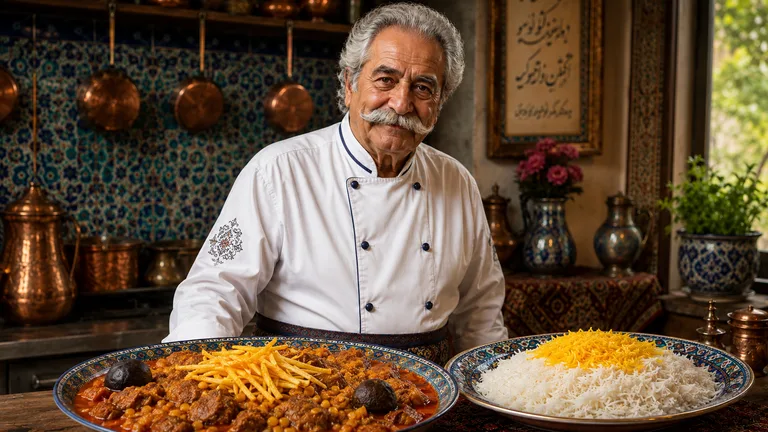
Small pieces of beef chuck simmer with golden onions, tomato paste, and dried limes until tender. Separately cooked yellow split peas keep their shape, saffron and a little cinnamon round out the sauce, and crisp potato matchsticks go on only at serving.
Watch the cooking film
Natural kitchen ambience accompanies this short film. Use the player controls to enable sound.
Across time and place
Gheymeh is a familiar Iranian khoresh, usually served beside plain rice. Beef and lamb versions, the amount of dried lime, and the potato topping vary; the aim here is a gently tart, well-reduced stew with distinct split peas.
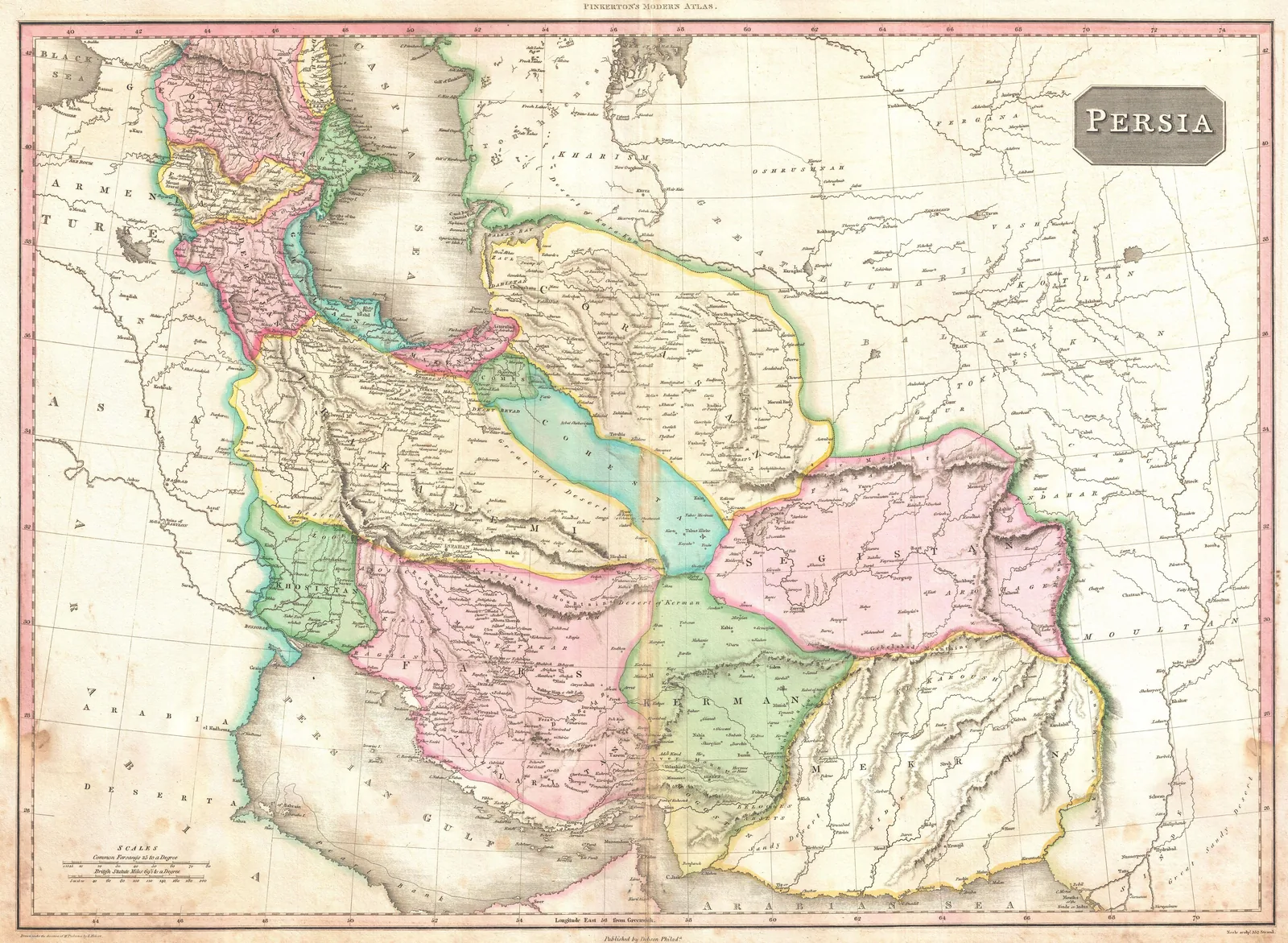 Across Iran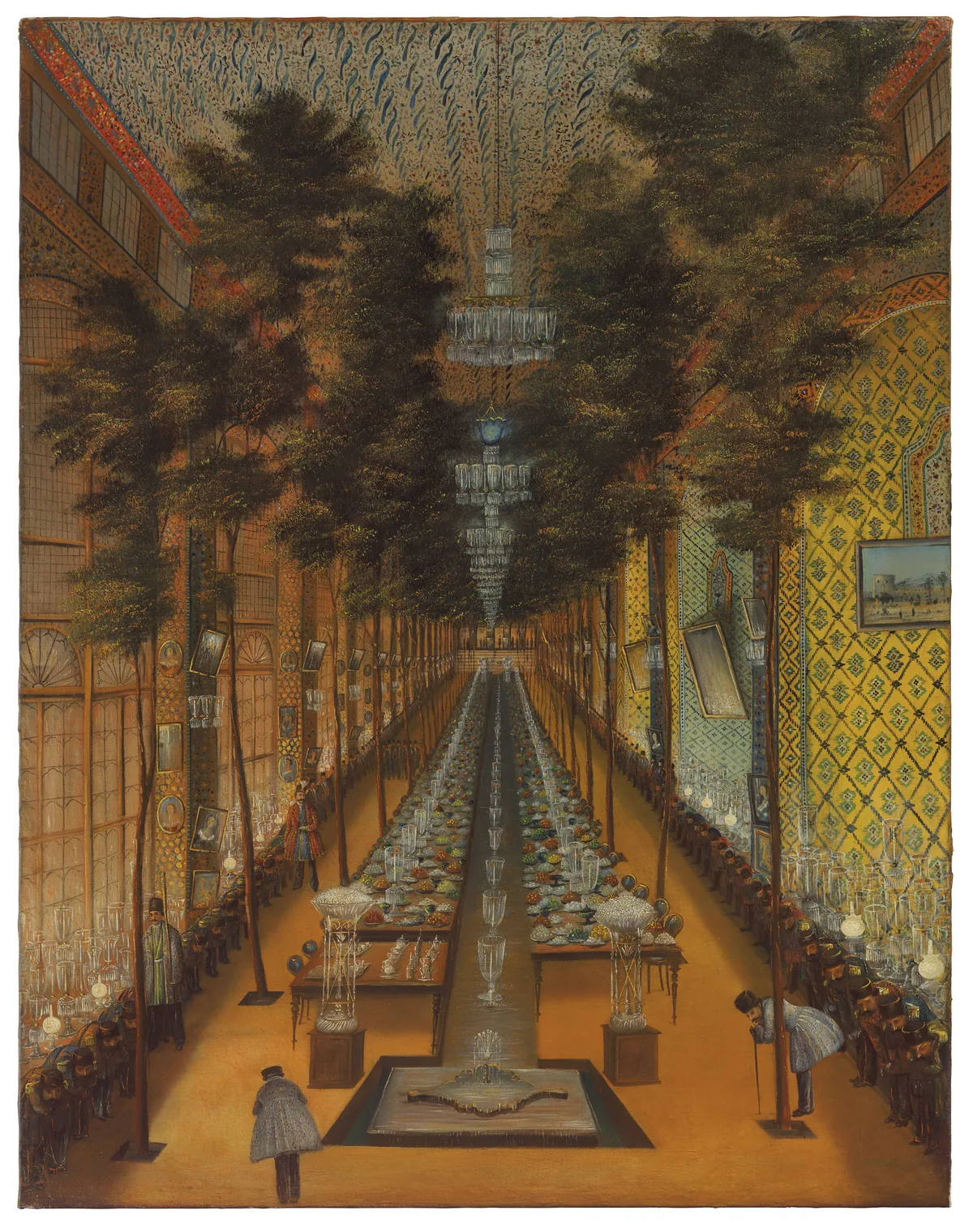
The marker indicates a broad Iranian culinary tradition—not a proven point of invention.
Iranica lists gheymeh among Iran’s principal khoresh dishes. The broader khoresh tradition combines meat, onions, vegetables or legumes, and restrained spices, usually served with rice.
The stew belongs to Iranian cookery, but its current tomato-and-potato form should not be projected unchanged into antiquity. Iranica’s cookery history places the arrival of tomatoes and potatoes in Iran much later than the older stew tradition.
Before you begin
Every ingredient includes U.S. and metric quantities, buying guidance, preparation, and a practical substitution.

Why it mattersChuck’s connective tissue softens during slow cooking and enriches the sauce.
ChooseChoose a fresh, moderately marbled braising cut rather than very lean steak.
PrepareTrim large hard fat deposits, pat dry without washing, and cut into 3/4-inch (2 cm) pieces.
SubstituteBoneless lamb shoulder works by weight; judge tenderness rather than using the beef time unchanged.
AllergenNo common major allergen in plain beef; check any pre-seasoned meat.
Why it mattersSplit peas supply the distinct golden pieces and gently thicken the stew.
ChooseChoose yellow split peas suitable for gheymeh; age and variety strongly affect cooking time.
PreparePick over, rinse, and cook separately until just tender so it does not dissolve while the beef braises.
SubstituteGreen split peas change the color and flavor. Split chickpeas are not a direct timing substitute and need longer separate cooking.
AllergenContains legumes; consider individual pea allergies.
Why it mattersOnions create the sweet, savory foundation of the sauce.
ChooseChoose firm, dry onions without green sprouts.
PreparePeel and dice finely so the onion melts into the braising liquid.
SubstituteWhite onions can be used in the same amount.
AllergenNo common major allergen; individual allium sensitivity is possible.
Why it mattersConcentrated tomato provides the red-gold color and rounded acidity.
ChooseChoose plain tomato paste without added sugar or strong herbs.
PrepareFry briefly with the onions to deepen its color and soften the raw taste.
SubstituteConcentrated tomato purée may work, but extra water requires longer reduction.
AllergenNo common major allergen; check flavored products for added ingredients.
Why it mattersDried lime gives gheymeh its gently tart, deep citrus character.
ChooseChoose intact, light-feeling limes with a pleasant aroma and no mold.
PrepareRinse, soak in warm water for 15–20 minutes, then pierce each twice; add late and taste regularly.
SubstituteIf unavailable, finish with 1–2 tablespoons (15–30 mL) fresh lime juice to taste; the aroma will differ.
AllergenNo common major allergen; inspect packaged dried fruit for sulfite statements.
Why it mattersFreshly fried matchsticks provide the crisp contrast to the soft stew.
ChooseChoose firm starchy potatoes without green skin or sprouts.
PreparePeel, cut into thin even matchsticks, rinse, and dry completely before frying.
SubstituteUse plain ready-made potato sticks if appropriate; check their oil, salt, and allergen labels.
AllergenPlain potatoes have no common major allergen; prepared fries may contain wheat or other coatings.
Why it mattersTurmeric gives the savory base warm color and an earthy note.
ChooseUse fragrant turmeric stored away from light.
PrepareStir into the onions before adding tomato paste.
SubstituteOmit if needed; curry powder is not equivalent.
AllergenNo common major allergen; check spice cross-contact if relevant.
Why it mattersA small finishing amount rounds out the lime and tomato without dominating.
ChooseChoose fresh cinnamon with a sweet aroma.
PrepareMeasure sparingly and add near the end with saffron.
SubstituteOmit for a simpler lime-and-saffron profile.
AllergenNo common major allergen; avoid pre-sweetened spice blends.
Why it mattersSaffron adds a floral finishing aroma to the tomato broth.
ChooseUse deep-red threads from a trusted source.
PrepareGrind and infuse in 2 tablespoons (30 mL) hot water for 10 minutes.
SubstituteOmit if unavailable; do not substitute food coloring for aroma.
AllergenNo common major allergen; check packaged blends for additives.
Why it mattersOil browns the stew base and shallow-fries the potato topping.
ChooseChoose a fresh neutral oil suitable for frying.
PrepareReserve 3 tablespoons (45 mL) for the stew and 5 tablespoons (75 mL) for the potatoes.
SubstituteBake potatoes tossed with a little of the measured oil if preferred; the texture will differ from shallow-fried sticks.
AllergenSelect an oil compatible with diners’ allergies.
Why it mattersSalt seasons the meat, sauce, and freshly fried potatoes.
ChooseUse plain fine salt and adjust other types by weight.
PrepareUse 1 teaspoon in the stew and reserve 1/4 teaspoon for the potatoes; adjust only after reduction.
SubstituteReduce to taste, especially if serving with salted rice or packaged potato sticks.
AllergenNo common major allergen in plain salt.
Why it mattersPepper supports the meat’s savoriness without making the stew hot.
ChooseFreshly grind whole peppercorns when possible.
PrepareAdd with the turmeric; taste again at the end.
SubstituteUse less for a milder result or omit.
AllergenNo common major allergen in plain pepper.
Why it mattersSeparate cooking water lets the beef tenderize and the split peas stay intact.
ChooseUse potable water with a neutral taste.
PrepareUse 3 cups (720 mL) for the stew and about 3 cups (720 mL) for split peas; reserve extra for saffron, lime soaking, and topping up.
SubstituteUnsalted beef stock may replace the stew water; check the label for added allergens and salt.
AllergenPlain water has no common major allergen; stock may introduce celery, wheat, or other ingredients.
Step by step
Pat the beef dry without rinsing and cut into 3/4-inch (2 cm) pieces. Finely dice the onions. Pick over and rinse the split peas. Keep the raw-meat board and utensils separate from the potato and garnish preparation.
Heat 2 tablespoons (30 mL) of the stew oil over medium-high heat in the heavy pot. Brown the beef in two batches, turning to color several sides, then transfer to a bowl. Lower the heat if the browned residue threatens to burn.
Add the remaining 1 tablespoon (15 mL) stew oil and the onions. Cook over medium heat until soft and light gold, scraping up the browned residue. Stir in turmeric and pepper for 30 seconds, then fry the tomato paste for 2 minutes, stirring constantly.
Return beef and its juices to the pot. Add 3 cups (720 mL) hot water and 1 teaspoon salt, scraping the base clean. Bring to a simmer, cover, and cook on low. Check occasionally and add a little hot water if the meat is becoming exposed.
While the beef braises, cover the rinsed split peas with about 3 cups (720 mL) fresh water in a saucepan. Bring to a boil, skim, and simmer gently. Test early and drain as soon as they are just tender, before their edges collapse.
During the braise, rinse dried limes and soak in warm water for 15–20 minutes. Discard that water and pierce each lime twice. Grind saffron, add 2 tablespoons (30 mL) hot water, cover, and leave for 10 minutes.
When the beef is nearly tender, add the cooked split peas and pierced limes. Simmer gently with the lid ajar for 20–30 minutes, stirring carefully once or twice. Taste the lime flavor after 15 minutes and remove the limes if the tartness is sufficient.
While the stew finishes, peel the potatoes and cut into even matchsticks about 1/8 inch (3 mm) thick. Rinse off surface starch, drain, and dry thoroughly between clean towels. Water left on the sticks will splatter in hot oil.
Heat the reserved 5 tablespoons (75 mL) oil in the skillet over medium-high heat. Add dry potatoes in uncrowded batches and fry, turning often, until golden and crisp. Lift onto paper towels and season with the reserved 1/4 teaspoon salt. Do not pour frying oil into the stew.
Stir saffron infusion and cinnamon into the stew for the final 5 minutes. Remove and discard the dried limes. Taste and adjust salt; simmer uncovered if watery, or add a spoonful of hot water if too thick. If the beef is still resistant, continue gently until tender.
Rest off the heat for 5 minutes. Spoon the stew into a warm serving dish and scatter potato sticks over the top just before eating. Serve with plain rice prepared separately and keep additional fries beside the dish.
Refrigerate stew and potatoes separately in shallow covered containers within 2 hours, at 40°F (4°C) or below. Use within 3 days. Freeze the stew without fries for up to 2 months for best quality and thaw in the refrigerator.
Add a little water and reheat the stew on the stove, stirring gently, until bubbling and at least 165°F (74°C) throughout. Recrisp potatoes separately in a 375°F (190°C) oven and add at serving; freshly fried potatoes give the best texture.
Food safety
Do not wash raw beef; keep its juices away from ready-to-eat food and wash hands and tools after handling. Braise until fully tender and cooked through; reheat leftovers to 165°F (74°C). Dry potatoes thoroughly, never leave frying oil unattended, and refrigerate within 1 hour when the room exceeds 90°F (32°C).
Good to know
They probably cooked alongside the beef for too long, or were a fast-cooking variety. Cook separately until just tender and add only for the last 20–30 minutes, stirring gently.
Use sound limes, soak briefly, pierce rather than crush them, and add late. Taste during the final simmer and remove them when the tartness is right; crushing seeds can make bitterness more pronounced.
Yes. Chill the finished stew promptly and refrigerate; fry the potatoes close to serving. Reheat the stew thoroughly with a little water, since split peas absorb some sauce overnight.
No. Keep a gentle simmer, add hot water if needed, and give the connective tissue more time to soften. A hard boil can break up the peas and reduce the sauce before the meat is tender.
Cooked by you
Share a photo of your dish and a note about how the recipe went. Every submission is reviewed before public display, and submission does not guarantee publication.