Persian saffron rice pudding with rosewater, almonds, and cinnamon
Rice cooks slowly in water until its grains soften and begin to dissolve, then sugar, bloomed saffron, rosewater, cardamom, and almonds transform it into a glossy golden pudding. Cinnamon, pistachios, and rose petals finish each bowl.
Natural kitchen ambience accompanies this short film. Use the player controls to enable sound.
Across time and place
History & origin
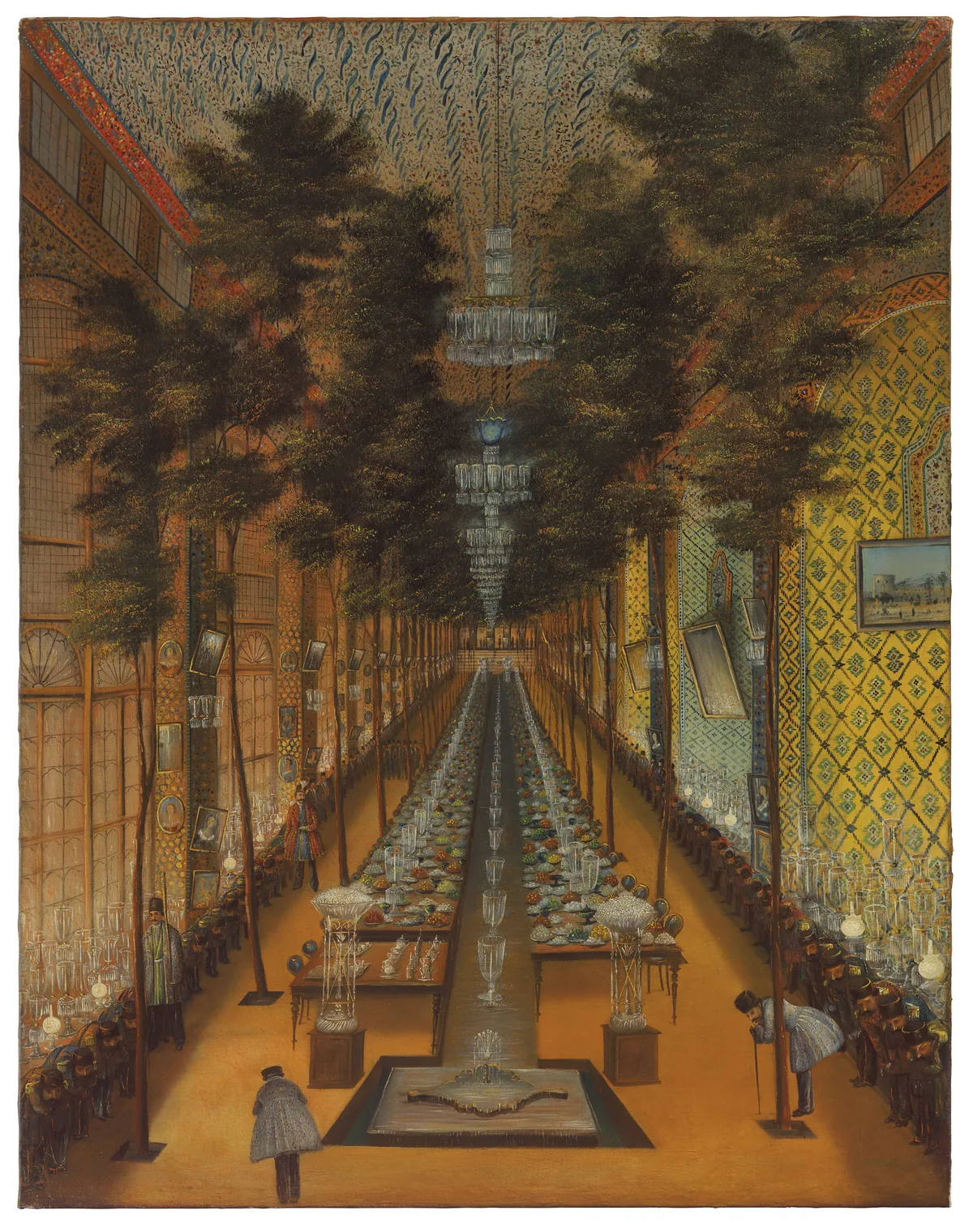
Sholeh zard is an Iranian saffron rice pudding documented among dishes served in Qajar-era ceremonial and devotional settings. It remains closely associated with nazri—food prepared and shared in fulfillment of a vow or for religious remembrance—while also appearing at celebrations and ordinary family tables. Decoration patterns differ by occasion and cook.
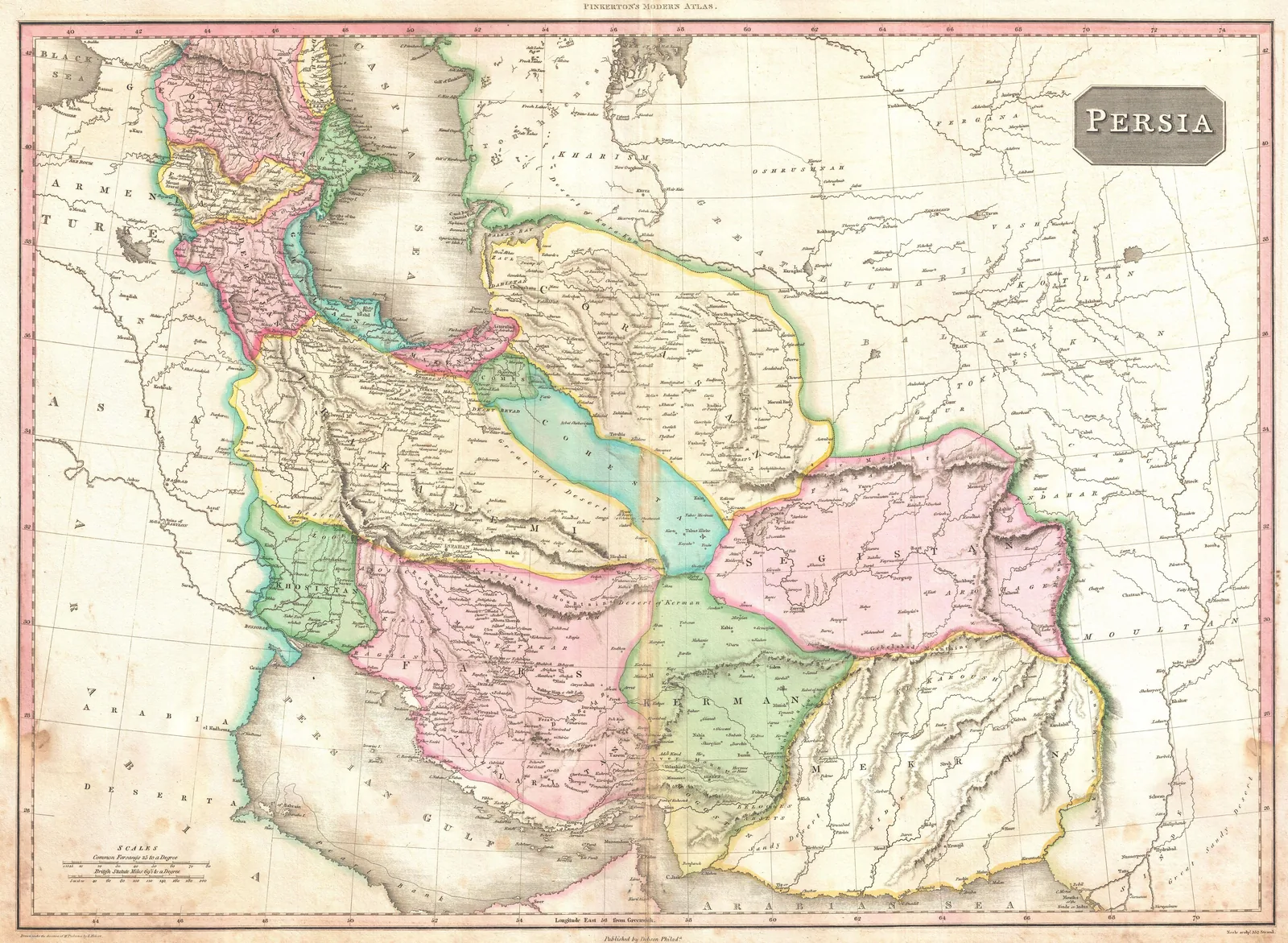
⌖The marker indicates a broad Iranian culinary tradition—not a proven point of invention.
01
The historical trail
Historical accounts of Qajar cuisine identify sholeh zard as a saffron rice pudding served on devotional vow tables, during mourning months, and at funerals. Its continuing role as nazri links the dessert to communal preparation and distribution as well as household hospitality.
02
Place and tradition
Sholeh zard is Iranian and belongs to the broader history of rice cookery on the Iranian plateau. The familiar modern form is water-based and scented with saffron and rosewater rather than made as a milk pudding.
Before you begin
Ingredients
Every ingredient includes U.S. and metric quantities, buying guidance, preparation, and a practical substitution.
A visual guide to the principal ingredients; exact quantities appear below.
01White long-grain rice1 cup/200 g+
Why it mattersRice breaks down during prolonged cooking to create the pudding’s body without milk or starch.
ChooseChoose fresh Iranian-style, basmati, or jasmine rice; broken grains are also suitable.
PrepareRinse until the water is nearly clear, then soak in cool water for 30 minutes and drain.
SubstituteShort-grain white rice works but produces a softer, stickier texture.
AllergenNo common major allergen; verify packaging if cross-contact matters.
02Water7 cups, plus boiling water if needed/1.65 L++
Why it mattersWater allows the grains to open completely and form a translucent pudding.
ChooseUse fresh-tasting potable water.
PrepareKeep a kettle of boiling water nearby for small consistency adjustments.
SubstituteDo not substitute milk; classic sholeh zard is water-based.
AllergenNo allergen.
03Granulated sugar2 cups/400 g+
Why it mattersSugar sweetens the pudding and creates its characteristic glossy finish.
ChooseUse dry, free-flowing granulated sugar.
PrepareAdd only after the rice is fully soft; earlier addition slows its breakdown.
SubstituteReduce by no more than one-quarter without expecting the same set and shine.
AllergenNo common major allergen; specialty sugars may have separate processing statements.
04Saffron threads1/2 tsp, loosely packed/0.3 g+
Why it mattersSaffron gives sholeh zard its defining gold color, floral aroma, and gentle bitterness.
ChooseChoose vivid red threads with a clean floral aroma, not dusty powder.
PrepareGrind with a pinch of sugar and bloom in 1/4 cup (60 mL) hot water.
SubstituteThere is no equivalent substitute; omit rather than using artificial coloring.
AllergenNo common major allergen; buy from a reliable source to reduce adulteration risk.
05Hot water for blooming saffron1/4 cup/60 mL+
Why it mattersHot water extracts saffron’s color and aroma evenly before it meets the rice.
ChooseUse water just below a full boil.
PrepareCover the bowl while the saffron blooms.
SubstituteA small clean ice cube may be used for a slower cold-bloom method.
AllergenNo allergen; handle hot water carefully.
06Rosewater1/3 cup/80 mL+
Why it mattersRosewater supplies the recognizable floral finish without dairy.
ChooseChoose culinary rosewater with a clean aroma and no perfume additives.
PrepareMeasure accurately and add near the end so its aroma remains fresh.
SubstituteUse orange-blossom water sparingly for a different dessert, not an identical substitute.
AllergenCheck flavored products for preservatives or cross-contact statements.
07Slivered almonds1/2 cup/60 g+
Why it mattersAlmonds soften slightly in the pudding while retaining a delicate bite.
ChooseChoose pale, fresh-smelling slivers without rancid odor.
PrepareRinse and soak in cool water for 30 minutes; drain before adding.
SubstituteOmit for a nut-free version; do not replace with an unverified seed if allergies are severe.
AllergenContains almond, a tree nut.
08Unsalted butter2 tbsp/28 g+
Why it mattersButter rounds the saffron and gives the finished pudding a soft sheen.
ChooseUse fresh unsalted butter so salt remains controlled.
PrepareCut into small pieces and stir in at the end.
SubstituteUse 2 tablespoons (30 mL) neutral oil or omit for a dairy-free version.
AllergenContains milk.
09Ground cardamom1/2 tsp/1 g+
Why it mattersCardamom adds warm citrus and eucalyptus notes beneath the rosewater.
ChooseFreshly grind green cardamom seeds for the brightest aroma.
PrepareSift if coarse and add with the saffron.
SubstituteReduce or omit if a simpler saffron-rose profile is preferred.
AllergenNo common major allergen; inspect spice packaging for cross-contact.
10Fine sea salt1/4 tsp/1.5 g+
Why it mattersA small amount prevents the sweetness from tasting flat.
ChooseUse fine salt for complete dissolution.
PrepareAdd while the rice cooks in water.
SubstituteOmit if medically necessary; the flavor will be slightly less defined.
AllergenNo common major allergen.
11Ground cinnamon1 tsp, for garnish/3 g+
Why it mattersCinnamon provides aromatic contrast and traditional surface decoration.
ChooseChoose fragrant cinnamon without a dusty smell.
PrepareApply only after the surface has cooled enough to hold a clear pattern.
SubstituteOmit or use less if its flavor would overpower the saffron.
AllergenNo common major allergen; check spice labels for cross-contact.
12Shelled pistachios1/4 cup, slivered/30 g+
Why it mattersPistachios add green color and a crisp finish to the garnish.
ChooseChoose vivid kernels without rancid or paint-like odor.
PrepareSlice or chop and keep dry until decorating.
SubstituteOmit for a nut-free version.
AllergenContains pistachio, a tree nut.
13Food-grade dried rose petals1 tbsp, optional/2 g+
Why it mattersRose petals echo the rosewater and add color to the finished bowls.
ChooseUse petals explicitly labeled food-grade and free of decorative chemicals.
PrepareCrumble lightly and add after cooling.
SubstituteOmit without changing the pudding.
AllergenNo common major allergen; floral sensitivity is possible.
Step by step
Method
Equipment
Large heavy-bottomed pot
Wooden spoon or silicone spatula
Fine-mesh strainer
Small heatproof bowl
Eight serving bowls
01
Rinse and soak
Rinse rice until the water is nearly clear, then soak for 30 minutes. Separately soak the almonds in cool water. Drain both.
Time
30 minutes
Look for
Rice grains look slightly opaque and hydrated; almond slivers have begun to soften.
02
Bloom the saffron
Grind saffron with a pinch of sugar, stir in hot water, cover, and set aside.
Time
10 minutes
Look for
The liquid is vivid orange-gold and strongly aromatic.
03
Begin cooking the rice
Combine drained rice, 7 cups (1.65 L) water, and salt in the pot. Bring to a boil, skim any foam, then reduce to a steady gentle simmer.
Time
10–12 minutes
Look for
The liquid simmers without surging over the pot and the grains move freely.
04
Cook until the grains open
Simmer partially uncovered, stirring from the bottom every 8 to 10 minutes. Add boiling water 1/4 cup (60 mL) at a time only if the rice thickens before becoming very soft.
Time
45–60 minutes
Look for
Grains have split and crush effortlessly between two fingers; the mixture resembles loose porridge.
05
Add the sugar
Stir in sugar gradually. Continue cooking over low heat and scrape the bottom frequently because the pudding can catch after sweetening.
Time
12–15 minutes
Look for
Sugar is fully dissolved, the pudding is glossy, and no gritty crystals remain.
06
Add saffron, cardamom, and almonds
Stir in bloomed saffron, cardamom, and drained almonds. Simmer gently, stirring often.
Time
10 minutes
Look for
The color is evenly deep gold and the almonds are tender but not mushy.
07
Finish with rosewater and butter
Stir in rosewater and butter. Cook only until the butter disappears and the floral aroma is integrated.
Time
4–5 minutes
Look for
The surface shines and smells floral without a raw, sharply perfumed edge.
08
Check the final consistency
Drag the spoon across the pot. The path should close slowly; remember the pudding will firm considerably as it cools. Thin with a little boiling water if necessary.
Time
2–3 minutes
Look for
The hot pudding flows thickly from the spoon rather than dropping as a stiff lump.
09
Portion and decorate
Ladle into clean shallow bowls. Let the surface settle briefly, then decorate with cinnamon, pistachios, and food-grade rose petals.
Time
8–10 minutes
Look for
The surface is level enough to hold distinct decoration without the garnish sinking.
10
Cool safely
Cool the shallow bowls briefly, then cover and refrigerate. Do not leave the rice pudding at room temperature for more than 2 hours.
Time
At least 2 hours
Look for
The pudding is chilled and softly set, with no watery layer on top.
◌
Storage
Cover and refrigerate promptly for up to 3 days. Sholeh zard does not freeze well because thawing can make it watery and grainy.
↺
Reheating
Sholeh zard is usually served chilled or cool. To serve warm, heat a portion gently with a splash of water, stirring until steaming throughout; do not repeatedly warm and cool the full batch.
✦
Variations
Omit butter and use neutral oil for a dairy-free version.
Omit almonds and pistachios for a nut-free version, using cinnamon decoration only.
Use less rosewater for a saffron-forward pudding, but add it at the same late stage.
Food safety
Cook with care and judgment
Cooked rice can support bacterial growth if held warm or at room temperature too long. Portion into shallow bowls, refrigerate within 2 hours, keep at 40°F (4°C) or below, and discard any serving left out beyond safe limits.
Allergens
Contains milk, almond, and pistachio as written.
Nut-free and dairy-free adaptations require clean tools and verified ingredient labels to prevent cross-contact.
It was probably reduced too far before cooling. While it is still hot, stir in boiling water a few tablespoons at a time; chilled pudding cannot be corrected as smoothly.
02Why can I still feel firm rice grains?+
The sugar was likely added before the grains fully opened. Cook rice in water until it crushes effortlessly, adding boiling water as needed, and only then sweeten it.
03Can I reduce the sugar?+
Yes, by about one-quarter for a less-sweet pudding. A larger reduction changes the traditional balance, gloss, and chilled set.
04Can I prepare sholeh zard one day ahead?+
Yes. It sets well overnight. Cover after it has stopped steaming and refrigerate; add any garnish that must remain crisp shortly before serving.
Cooked by you
From your table
Share a photo of your dish and a note about how the recipe went. Every submission is reviewed before public display, and submission does not guarantee publication.