The historical record
What the records tell us
The name kotlet has a history of its own. Dehkhoda's Persian dictionary identifies it as a word of French origin and describes several minced-meat preparations, including one with cooked split peas. This lexical record shows that the name can cover more than today's familiar meat-and-potato patty; it does not establish when that particular version first appeared.
Origins & development
An evolving home tradition
Potatoes provide another part of the historical context. Bert G. Fragner's account in Iranica places their arrival in Iran in the nineteenth century; Mohammad Reza Ghanoonparvar's survey lists kotlets among the established fried patties of Persian cookery. These records concern the history of an ingredient and the dish's place in Iranian cooking, not a dated invention. Contemporary family accounts show the tradition continuing in both raw- and cooked-potato versions.
At the Persian table
The bread-and-pickle table
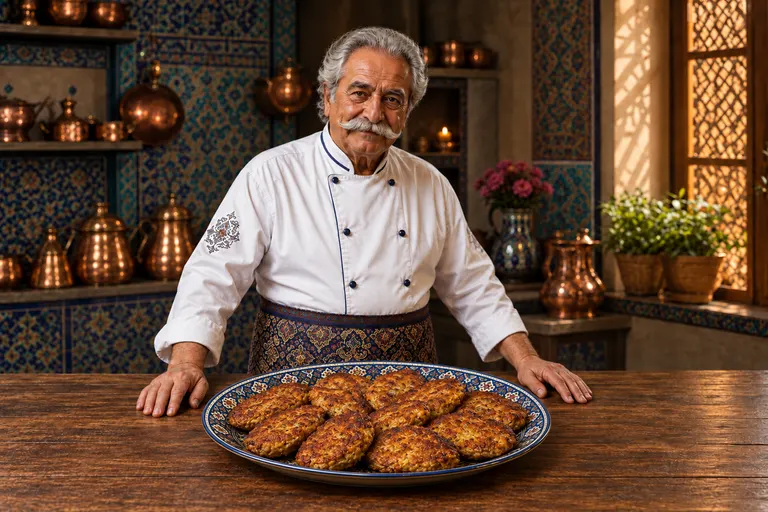
Kotlet belongs as easily in a bread-and-pickle lunch as on a dinner platter. Families differ over raw versus cooked potato and their favorite spices. This version uses raw potato, a little flour, and one egg for a cohesive, thin patty.