The history, places and traditions behind the dish, with archival images and a closer look at the sources.
The historical record
One name, many kinds of halva
Halva is a broad name for sweets made with different main ingredients. Encyclopaedia Iranica distinguishes flour, rice, and sesame versions and records halva in religious offerings and commemorative gatherings. Those connections describe a varied tradition, not one universal recipe.
A hand-colored 1818 map by John Pinkerton. Historic borders and spellings reflect the map’s own period; the overlay is an editorial guide to culinary geography, not a territorial claim.
Iran is highlighted for the flour-based style discussed here. The many foods called halva have wider histories; this point does not assign all of them an Iranian birthplace.
Iranian food writer Azita Mehran documents a family flour halva flavored with rosewater and saffron, alongside memories of making it for loved ones. This recipe belongs to that flour-based style, with a small batch and a mix of butter and neutral oil.
At the Persian table
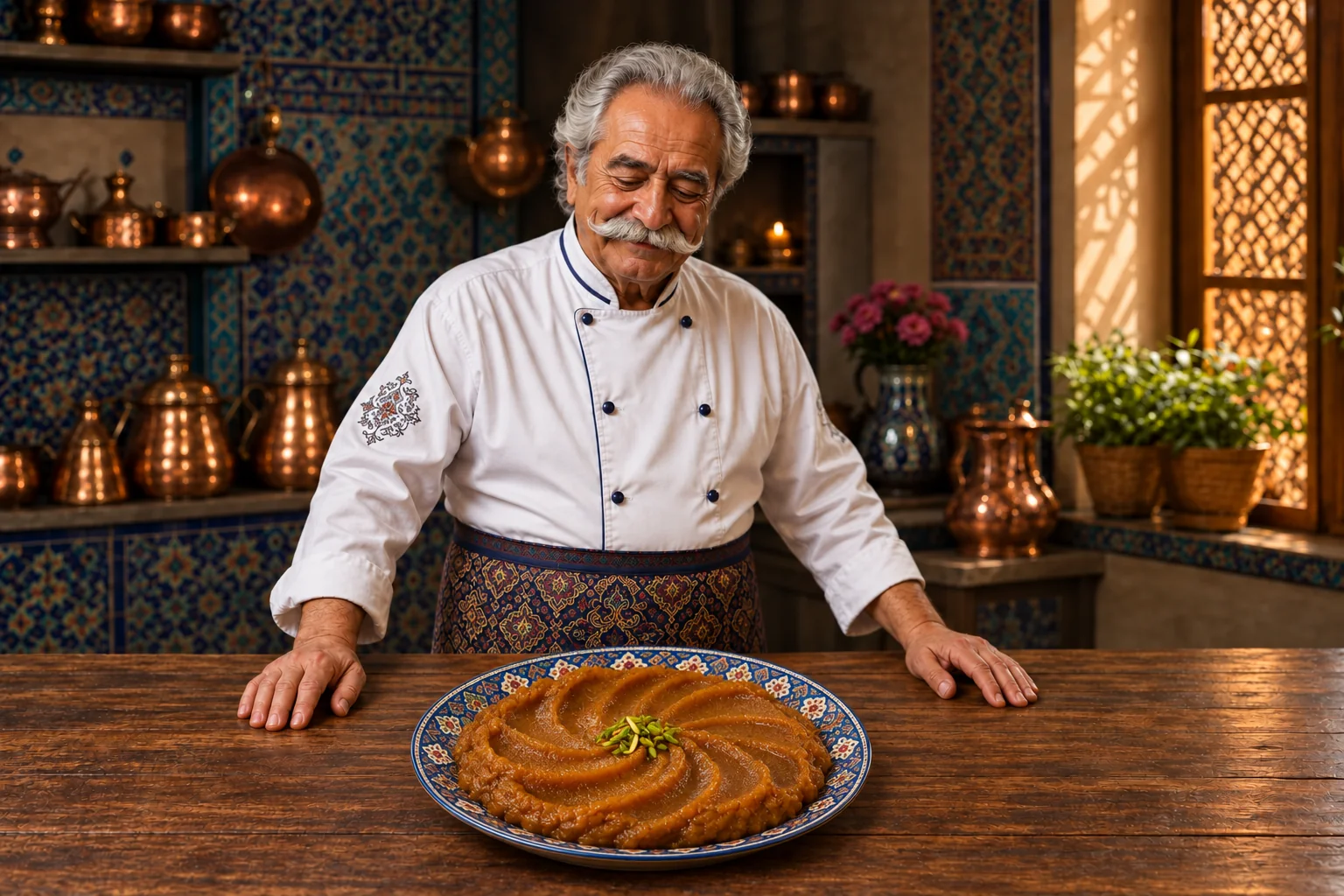
A plate made with care
In many Iranian families, halva carries memories of both everyday tea tables and occasions of remembrance. A beautifully patterned plate can express care without elaborate ingredients. Household recipes differ in flour, color, sweetness, and fat.