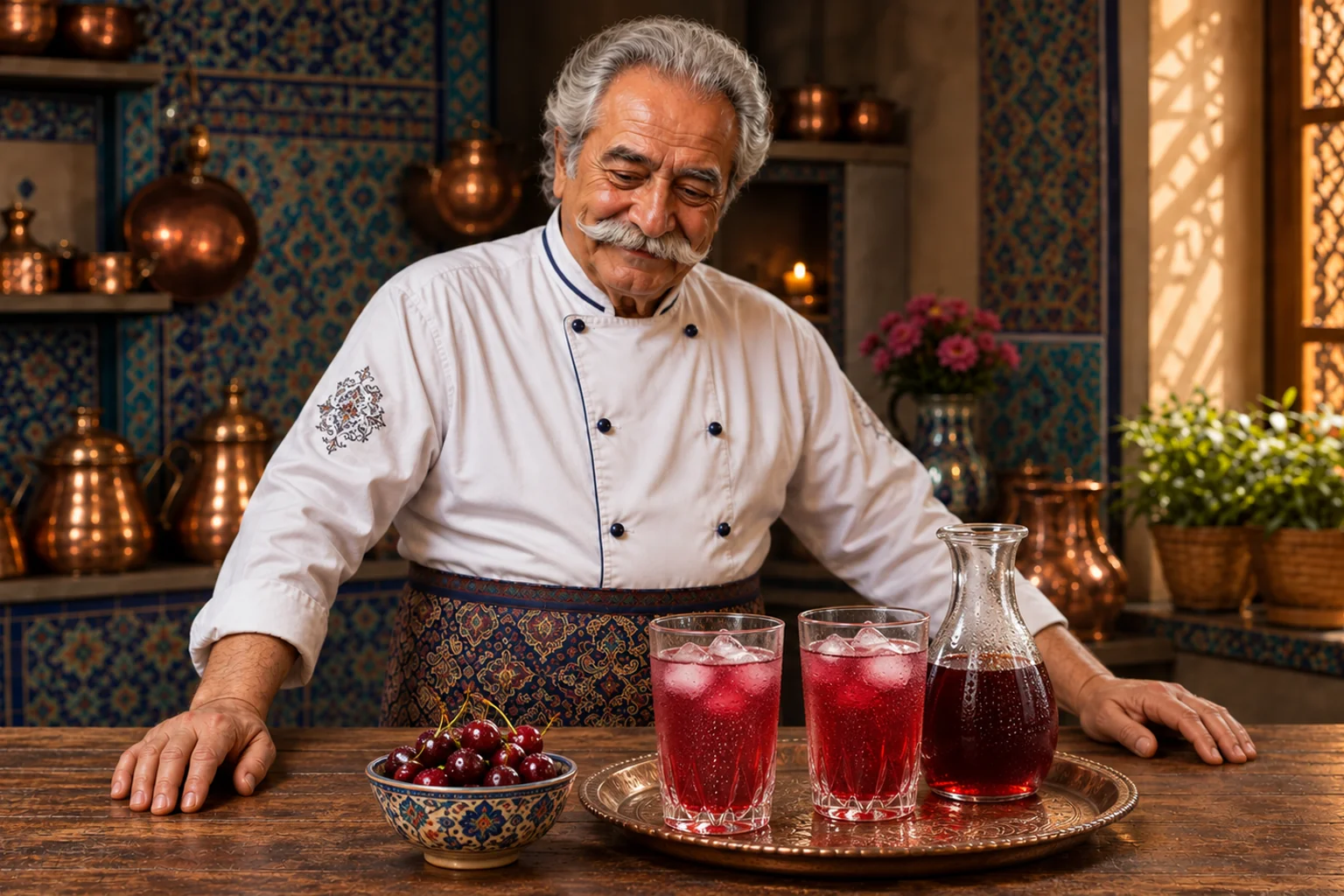
The history, places and traditions behind the dish, with archival images and a closer look at the sources.
The historical record
Sweet drinks in the hospitality record
Sharbat has a documented place in Persian hospitality. Encyclopaedia Iranica describes sweet drinks being offered with fruit and sweets during visits. That record concerns the broader custom; it does not date the invention of sour-cherry syrup.
A hand-colored 1818 map by John Pinkerton. Historic borders and spellings reflect the map’s own period; the overlay is an editorial guide to culinary geography, not a territorial claim.
The marker follows Iranian sharbat customs, not the botanical origin of sour cherries or a proven invention site for this syrup. Household recipes and serving occasions vary.
Contemporary Iranian recipe writer Samira records the home method of resting pitted sour cherries with sugar, cooking the released juice, and using the syrup in cold drinks or with desserts. It is a practical way to enjoy the fruit beyond a single bowl of fresh cherries.
At the Persian table
The sour cherry in the kitchen
In Iranian kitchens, albaloo means sour cherry, not sweet cherry. Its sharp flavor works beautifully in syrup, preserves, and rice dishes. This sharbat lets the fruit lead: there is no rosewater, mint, or food coloring in the recipe.